Sunday, June 3, 2012

Wednesday, May 16, 2012
30 Days: Living on Minimum Wage
In my gifted and talented class as part of our war, poverty and hunger unit, we watched an episode from the TV series 30 days. The host, Morgan Spurlock, and his fiancee challenge themselves to live a different lifestyle for 30 days. In this episode, the couple challenged themselves to live on minimum wage for 30 days. After seeing the show, I was asked to respond to a few questions.
1. What surprised you when watching this episode?
What surprised me the most was how much the couple began to argue. They would get so angry with each other, over a few dollars. When the kids came to stay with them the two became even more angry and things were heated.
1. What surprised you when watching this episode?
What surprised me the most was how much the couple began to argue. They would get so angry with each other, over a few dollars. When the kids came to stay with them the two became even more angry and things were heated.
2) Do you think this was a realistic portrayal of living life on minimum wage? Why or why not?
I actually don't think this was realistic. First of all, many people living in poverty have kids. Also, the real experiences can't be shown in a TV series. For example the couple rented a house in a bad neighborhood. But you never got to see how truly bad it was, when in reality people who make the minimum wage might live in bad neighborhoods where bad stuff happens. In the show I feel they had to make it safe for the cameramen and whatnot.
3) Overall, what did you learn from viewing this episode?
I learned how difficult it really is to live in poverty. It is so strenuous on not only the mental health of the people, but on the physical health of them too. People are worn down by living in poverty, and it is so incredibly difficult to make ends meet. I learned that I should appreciate what I have, and not waste anything.
Friday, May 11, 2012
Friday, May 4, 2012
ASL
When learning a new language, there are a few types of vocabulary words that one learns first. For example when I learned Spanish, we started off with greetings. Now that I already know a few common words (colors) and the alphabet, I can begin to learn how to actually communicate in ASL.
Also while I'm learning all of this vocabulary, I am continuing to learn a song in sign language! The name of the song is a suprise though, so you'll have to be patient.
COMMON GREETINGS:
Hi / hello:
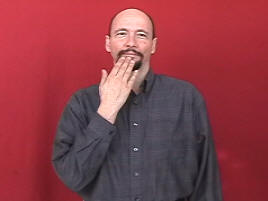

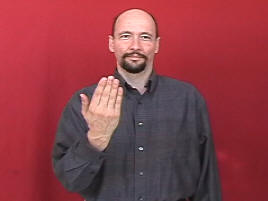
Good night:

Goodbye:
http://www.lifeprint.com/asl101/pages-signs/g/goodbye.htm
How are you:
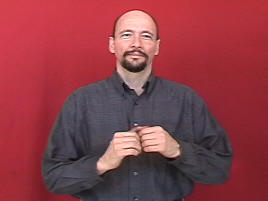
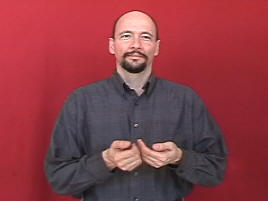
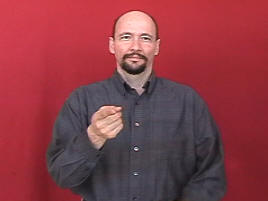
Whats up:
The sign for "what's up" uses a modified "5" handshape on each hand with the middle finger is bent forward from the large knuckle. The fingertips of the middle-fingers are placed on or near the chest and then the hands are flipped so that the middle fingers are pointing upward and the palms are facing up.
See you later:
http://www.lifeprint.com/asl101/pages-signs/advanced-signs/see-you-later.html
Thats all for now!
Also while I'm learning all of this vocabulary, I am continuing to learn a song in sign language! The name of the song is a suprise though, so you'll have to be patient.
COMMON GREETINGS:
Hi / hello:
Hey:
Good morning:
Good night:
Goodbye:
http://www.lifeprint.com/asl101/pages-signs/g/goodbye.htm
How are you:
Whats up:
The sign for "what's up" uses a modified "5" handshape on each hand with the middle finger is bent forward from the large knuckle. The fingertips of the middle-fingers are placed on or near the chest and then the hands are flipped so that the middle fingers are pointing upward and the palms are facing up.
See you later:
http://www.lifeprint.com/asl101/pages-signs/advanced-signs/see-you-later.html
Thats all for now!
Thursday, May 3, 2012
Poverty in Photos
Also in our war, poverty, and hunger unit, we also look at "photo essays." These are high quality pictures with a brief 2-3 sentence description underneath. The photo essays we have been viewing recently are about poverty in other countries. The essays featured in my blog came from boston.com's Big Picture. The website for this is at : http://www.boston.com/bigpicture/
 This is The Big Picture's description of the picture: Two Afghan refugee girls and a boy make their way through a muddy alley, following a rainy night, in a slum on the outskirts of Islamabad, Pakistan, Jan. 16, 2012. The Pakistani government and the United Nations refugee agency reached an agreement in March 2009, to allow some 1.7 million registered Afghan refugees living in Pakistan to continue sheltering there until at least 2012, thousands of them still live without electricity, running water and other basic services. (Muhammed Muheisen/Associated Press)
I saw this picture and I immediately thought of World War I. As abstract as that may seem, this picture makes me think of the movie, All Quiet on the Western Front. In the movie the main characters spent time in trenches, which look very much like the scene in this image. In both places the walls and floors are made of mud. It reminds me of how the people in the trench used to get "trench foot," and how that could possibly occur here. I didn't know that some people literally live in the mud. I am shocked to see this.
 The Big Picture's description:
25 Gold miners pass mud along a human chain in an open pit at the Chudja mine in the Kilomoto concession near the village of Kobu in north-eastern Congo, February 23, 2009. (REUTERS/Finbarr O'Reilly)


I saw this picture and I immediately thought of World War I. As abstract as that may seem, this picture makes me think of the movie, All Quiet on the Western Front. In the movie the main characters spent time in trenches, which look very much like the scene in this image. In both places the walls and floors are made of mud. It reminds me of how the people in the trench used to get "trench foot," and how that could possibly occur here. I didn't know that some people literally live in the mud. I am shocked to see this.

25 Gold miners pass mud along a human chain in an open pit at the Chudja mine in the Kilomoto concession near the village of Kobu in north-eastern Congo, February 23, 2009. (REUTERS/Finbarr O'Reilly)
This is another picture where I am shocked to see people living in the mud. It seems like terrible work, I could never imagine working in the mud all day, and being covered with it. It really makes me think, "are there jobs in America like this?"

The Big Picture's description: Children walk along a road above a camp for people displaced by violence near Minova in eastern Congo, February 12, 2009. (REUTERS/Finbarr O'Reilly)
In this picture I can really see how poor this area is. There are so many people living here, but it seems almost in the middle of nowhere. The closest city or town is probably miles and miles away. And the types of houses here aren't even houses! They look like tents. I've never seen an area as poor as this. It really shocks me.
Wednesday, May 2, 2012
Waste Land
Recently in my gifted and talented class we have been studying war, poverty, and hunger. As part of this unit, we watched the movie, Wasteland. Honestly it's hard to watch that movie and take in the reality of the video. I've know about that lifestyle, but I never saw it in picture and video. This video makes me wonder if there are people in the United States, even people around me who live a lifestyle like this. It's truly disgraceful. I knew what this movie was going to be like, from beginning to end, but just the images shocked me. My opinion didn't really change that much, I knew what the video was going to b like. I suppose the video actually "hit home" a little more than what I already thought. I think Vik Muñiz gave these people more than any amount of money could. Sure, in the end he did end up giving these workers thousands of dollars, but he gave them more. He opened the door for them, which is the best thing he could do for those people. Vik really showed these people what the real world is like. He showed them the opportunities that were out there waiting for them. There is a saying, "Give a man a fish, feed him for a day. Teach a man how to fish, feed him for life." Vik did exactly that. He showed them their own potential, which opens them to anything.
This made me realize how much I throw out into the garbage. After watching this video I will be more conscientious about what I dispose of, and how much waste I produce. I'll try to limit how much I throw out. Some other cultures that could benefit from Vik Muñiz's work are people who generally live a poor lifestyle. For example, some people (not everyone, but there are some) out west live in a poor lifestyle. I'm not trying to be stereotypical, but from personal experience I know some people in Western America have a tougher time. One time when I went to South Carolina my family met a man who taught in a school in a western state. He told us about the lifestyle of the people there. He told us how the children went on a class trip to a restaurant, but most of them had never been to one before. That really shocked me. I thought that people would go to a restaurant at least one in their lifetime. In fact, my aunt and uncle eat out every night! I think that Vik's projects would also benefit these areas in America.
This made me realize how much I throw out into the garbage. After watching this video I will be more conscientious about what I dispose of, and how much waste I produce. I'll try to limit how much I throw out. Some other cultures that could benefit from Vik Muñiz's work are people who generally live a poor lifestyle. For example, some people (not everyone, but there are some) out west live in a poor lifestyle. I'm not trying to be stereotypical, but from personal experience I know some people in Western America have a tougher time. One time when I went to South Carolina my family met a man who taught in a school in a western state. He told us about the lifestyle of the people there. He told us how the children went on a class trip to a restaurant, but most of them had never been to one before. That really shocked me. I thought that people would go to a restaurant at least one in their lifetime. In fact, my aunt and uncle eat out every night! I think that Vik's projects would also benefit these areas in America.
Friday, April 20, 2012
Colors!
I'm continuing on learning how to speak ASL. This week I'm learning basic colors. From left to right are the signs for: red, orange, yellow, green, and blue.


I could not find a picture for the sign for purple, so I found a video. Here is the link: http://www.signingsavvy.com/wordlist/2/PURPLE/64
Also, from lifeprint.com I learned that pink is the same as red, but instead of using the motion for "r" down the lips, you use the motion for "k" down the lips.
I also couldn't find picture for the color black, but I learned from a video that the sign for "g" going across one's forehead means black.
Here is a video for the color, white: http://www.signingsavvy.com/wordlist/2/WHITE/53
This is the sign for brown.
Wednesday, April 4, 2012
4/4/12
 Today was more of a refresher, since I learned the ASL alphabet in 6th grade. Using this chart, I learned the ASL alphabet, and ASL numbers:
I also learned the sign for "I love you!":

That's all for today, next week I'll learn some colors and other common words!(:
20% Project
As a new unit in my Gifted & Talented class, we are giving one day a week to our own learning passions. Each student gets to pick any topic they want to learn about, and pursue that learning. I have decided to learn how to speak American Sign Language! I will be posting my progress weekly, and recording my learning experience. I hope you enjoy!!!
Tuesday, January 17, 2012
Terri Schiavo
In the latest unit of my Gifted and Talented Class we have been discussing the case of Terri Schiavo. Terri was 26 when she collapsed at home from a heart attack. The heart attack left her with extensive brain damage. Many people believe that this heart attack was an effect from Terri being bulimic. 3 years after her heart attack, Terri's family, the Schindlers, request that Mr. Schiavo was to be removed as Terri's guardian. This request is denied. In May of 1998, 5 years later, Michael Schiavo (Mr. Schiavo) files a petition to remove Terri's feeding tube. After many years, arguments, debates, appeals in court, and petitions, in October 2003 Mrs. Schiavo's feeding tube is removed. A few days later a law passed giving Jeb Bush the authority to keep Terri's feeding tube in her. The next day, the tube is reinserted. This law is eventually struck down, and there are more court cases throughout the years. The case is even brought up to the House of Representatives and the Senate, but the Supreme Court refused to become involved. On March 18th, 2005 Terri Schiavo's feeding tube was removed permanently. During the next 13 days appeals were made to replace the tube but they all failed. On March 31, 2005 Terri Schiavo was pronounced dead 13 days after the removal of her feeding tube. After her death there was an autopsy performed to see her brain damage.
I do believe that it was justified to disconnect Terri. Although it goes against my moral beliefs, she had no way of being able to live. Even if Terri could ever wake up, her life wouldn't be very worth living. Her brain damage was extremely extensive as you can see in the picture above. Terri was already depressed about something before she suffered from the heart attack. The fact that she was bulimic shows that she wasn't happy with herself. Bulimia is an extreme measure, and I'm sure that just weight issues were the only contributing factor to her bulimia. Terri was already close to being dead. I believe that disconnecting Terri was justified, but not the way that she was disconnected. Removing her feeding tube is like cutting off someone's food supply.
 |
| On the left side is a average brain. On the right is the ammount of damage they found in Terri's brain. The dark black represents water in the brain. The white dot in the middle is what was monitoring her brain. |
I do believe that it was justified to disconnect Terri. Although it goes against my moral beliefs, she had no way of being able to live. Even if Terri could ever wake up, her life wouldn't be very worth living. Her brain damage was extremely extensive as you can see in the picture above. Terri was already depressed about something before she suffered from the heart attack. The fact that she was bulimic shows that she wasn't happy with herself. Bulimia is an extreme measure, and I'm sure that just weight issues were the only contributing factor to her bulimia. Terri was already close to being dead. I believe that disconnecting Terri was justified, but not the way that she was disconnected. Removing her feeding tube is like cutting off someone's food supply.
Friday, January 6, 2012
Gattaca and Natal Spectrum
Recently in my Gifted and Talented class we watched the movie Gattaca. This movie is about a world where people are not conceived naturally, but instead are born by the method of pre- implantation genetic diagnosis for non-deleterious traits. These people are known as valids, and those born naturally as invalids. The movie focuses on one character, Vincent Freeman, an invalid child. Throughout the movie he struggles to find his place at a space port called Gattaca. When he discovers that the company is prejudice, Vincent becomes a "borrowed latter." He poses as a valid, Jerome Eugene Morrow, and is able to work at Gattaca. The real Jerome Eugene Morrow (known as Eugene) was a sports star, but became physically disabled. Eugene would supply Vincent with anything that contained his DNA: hair, skin, blood, even urine so he could pass as a valid. When the mission director is mysteriously murdered, everyone at Gattaca is under investigation- including Vincent. While investigating, the investigators find Vincent's real DNA, and suspect him. Little do they know that the real Vincent is right under their noses, as Jerome Morrow. When the investigators finally catch the real murderer, Vincent's boss, Vincent goes to see the head investigator. When he meets with the head investigator, Vincent sees that it is his younger brother, Anton who was better than him in everything. In the end, Vincent is able to achieve his dream, and go to Titan.
I felt that this movie was very dark and disturbing. I did not enjoy this movie. Gattaca showed the evils to having a pre- implantation genetic diagnosis for non-deleterious traits society, while showing no benefits of the process. I thought that this movie was unnecessarily violent, and very dark. This movie made me very uncomfortable, thinking that this could happen to our world.
There are many topics such as pre- implantation genetic diagnosis for non-deleterious traits that are under controversial debate. People view these topics differently, and everyone has opinions on these topics. I have listed these topics from what I believe as least controversial to most controversial:
I felt that this movie was very dark and disturbing. I did not enjoy this movie. Gattaca showed the evils to having a pre- implantation genetic diagnosis for non-deleterious traits society, while showing no benefits of the process. I thought that this movie was unnecessarily violent, and very dark. This movie made me very uncomfortable, thinking that this could happen to our world.
There are many topics such as pre- implantation genetic diagnosis for non-deleterious traits that are under controversial debate. People view these topics differently, and everyone has opinions on these topics. I have listed these topics from what I believe as least controversial to most controversial:
1. 1. Natural Reproduction
2. 2. Fertility drugs: Prescription drugs which increase a woman’s chance of becoming pregnant
3. 3. Carrier testing: Genetic tests of parents that show the risk of passing on a genetic disorder
4. Prenatal testing: genetic screening of fetus for genes that cause disorders
5.Pre-implantation Genetic Diagnosis for Diseases: Fertilization of sperm and egg in a Petri dish. Embryos are screened for a certain genetic disorder. Those without the defective gene are inserted into the female reproductive tract via a syringe in a doctor’s office.
6. In Vitro Fertilization: Fertilization of sperm and egg in a Petri dish. Viable embryos are chosen and inserted into the female reproductive tract via a syringe in a doctor’s office.
7.Artificial Insemination: Insertion of sperm into female reproductive tract by syringe in a doctor’s office
8.Pre-implantation Genetic Diagnosis for Non-deleterious Traits: Fertilization of sperm and egg in a Petri dish. Embryos are screened for genes of non-deleterious traits (such as hair color, height, sex). Those with desired genes are inserted into the female reproductive tract via a syringe in a doctor’s office.
9.Cloning: The creation of an organism that is an exact genetic copy of another.
I chose this in this order because first of all, natural birth is the least controversial- it is completely natural, nothing added. Fertility drugs are more controversial than natural birth because you are adding drugs to get pregnant, but it doesn't affect what kind of child is born. Next I had carrier testing because once again, it doesn't affect the child being born, but shows if it is possible for that child to have a disease without testing the eggs. After that there is prenatal testing, which is similar to carrier testing, but it tests the fetus instead of the parents. This is more controversial because it shows if the child has disease, but once it’s already conceived. Next is In Vitro Fertilization, which is also known as test tube babies. This topic is more controversial than the previous ones because it is unnatural and occurs outside the human body. Artificial Insemination, which is next, is more controversial because it is an injection into the human body, rather than meeting them both outside of the body. After that is pre-implantation genetic diagnosis for non-deleterious traits. This is like the designer babies, where you can pick and choose the traits of your child. This is what happened in the movie Gattaca where society became entirely made of children who are basically perfect. Finally, I have cloning as the most controversial, since by cloning someone many times, they truly never die. This method is very unnatural.
I personally think that humans should stop after carrier testing. After carrier testing, the other methods are unnatural, and would affect the outcome of the child, produce a child unnaturally, or like cloning, reproduce someone completely unnaturally. Carrier testing is the last one of these methods that is natural, and does not affect the outcome of the person being produced, if chosen to be produced.
Wednesday, December 14, 2011
Choices and Values
In my Gifted and Talented class, we are now transitioning to a new unit of ethics. After a few days of learning about terms such as values, and morals, we took a survey on our own values. Based on some questions that I answered, my results were:
- Education, Intelligence, Wisdom
- Love, Friendship, Personal closeness
- Religion, Spirituality
- Fulfillment, Intellectual and Vocational achievement
- Courage
Sunday, October 23, 2011
The Trouble with Geniuses Parts 1 &2
For the past few weeks, my Gifted & Talented class has been reading the book Outliers by Malcolm Gladwell. The book is about success, and how a person comes to be successful. Gladwell says that the opportunity that one has defines their success, and shows this through many examples. He talks about advantage, and how that plays a big role in success. In the book, Gladwell also mentions how to become good at something, you must spend time on it. He uses many famous people to prove his points, such as Bill Gates, Steve Jobs, and The Beatles. In fact, Gladwell writes, "We do owe something to parentage and patronage.......beneficiaries of hidden advantages and extraordinary opportunities and cultural legacies that allow them to learn and work hard and make sense of the world in ways others cannot. It makes a difference where and when we grew up."
In chapters 3 and 4 of Outliers (The trouble with Geniuses Parts 1 and 2), Gladwell emphasizes his point on how most people that win prizes and are very successful in life are not always those who have a high IQ. For much of the two chapters, he talks about who some say is the smartest man on Earth, Chris Langan. Langan has an IQ of 195. Einstein only had an IQ of 150. Gladwell writes about Chris's life, how no one cared or recognized that he was smart. Langan was officially considered a genius, and nothing less. However, Langan dropped out of college- twice. The first time, Langan's mother forgot to renew his scholarship, and so Langan quit. The second time, the college was giving Langan a hard time, so Langan also quit that school too. Now Langan lives married on his own farm in Milwaukee after years of being a bar bouncer. One would think that a genius like Langan would go on to be a doctor, or a profession of a similar sort. But Langan turned out to be a bar bouncer! For someone of Langan's potential, that is not very practical.
On the other hand, Gladwell also writes about Robert Oppenheimer, who was a physicist who helped to develop the atomic bomb during WWII. As a child, Oppenheimer was at a very similar level to Langan, they were both geniuses. However, Oppenheimer's parents cared about his education. He came from a much better background. Although Oppenheimer was slightly crazy by the fact that he tried to poison his tutor, he was extremely brilliant. Oppenheimer possessed something that Langan didn't, "practical intelligence." This is knowing what to say at the right times, to the right people. Gladwell also makes many other points about how it really doesn't matter how much of a genius someone is. As long as they have the potential to be smart, and the right background, they have a great potential to be successful.
In my Gifted & Talented class, we defined successful as "to maintain a balance between financial stability and happiness with self and others and to accomplish the goals you want to achieve." In an interview that my class saw about Chris Langan, he said that he was happy with his life. He's married, he owns his own farm, and he still continues to surround himself with knowledge and other things that he loves. He has enough money to do what he wants, and I think that he has achieved most of his life goals. Chris Langan might not be rich and famous, but he is definitely successful. He fits our class definition almost like a glove.
There is a lot that I'll take away from this chapter. First of all, I now realize that some of the people who are famous and rich aren't much more of a genius than I am. They just had better chances and opportunities than others. I know now that it doesn't really matter in terms of being successful how smart I am. I know that I come from an excellent background, and that will help me in life. But I now also know that being successful isn't just about being rich. It's also about the pursuit of happiness. There are those who may think that Oppenheimer was successful. Sure, he was rich, and famous, and remembered through history. But Oppenheimer wasn't happy like Langan. Oppenheimer was in a state of depression for most of his life. And because of this, I would say that Langan is more successful than Oppenheimer ever was. I strive to be as successful as Langan.
Wednesday, September 28, 2011
Kindergarten Debate
The New York Times piece by Sam Wang and Sandra Aamodt, "Delay Kindergarten at your Child's Peril," was much in contrast with the first chapter of Malcolm Gladwell's book Outliers. They both spoke of how a child who starts later then their peers, and the effects from it. This delay is also known as redshirting.
In Outliers, Gladwell speaks of how being older brings a "accumulative advantage." I agree with this statement, and I have seen it applied in real life. Like how the book mentions, athletes who are born earlier in the year have had more time to practice, and are at a physical advantage to those who's birth dates are towards the end of the year. Also in many circumstances, this applies to school. Those who are born within the first few months of the year have an advantage to others. They have had more time learning math, and reading.
Nevertheless, I disagree with Wang and Aamodt. They claim that redshirting affects a child's learning in a negative way. I have seen myself that holding a child back doesn't leave them behind. My cousin has a learning disability in which he does not hear, and understand as well as other children. He is also unable to process multiple requests at the same time. Since the problem was noticed before he began schooling, my aunt held him back a year. Then, she placed him in a special needs school. There my cousin excelled, and did extremely well in school. He caught up, and is at the level of most children his age. All because he waited a year. This year, he was placed into the regular public school, and he is doing very well.
In Outliers, Gladwell speaks of how being older brings a "accumulative advantage." I agree with this statement, and I have seen it applied in real life. Like how the book mentions, athletes who are born earlier in the year have had more time to practice, and are at a physical advantage to those who's birth dates are towards the end of the year. Also in many circumstances, this applies to school. Those who are born within the first few months of the year have an advantage to others. They have had more time learning math, and reading.
Nevertheless, I disagree with Wang and Aamodt. They claim that redshirting affects a child's learning in a negative way. I have seen myself that holding a child back doesn't leave them behind. My cousin has a learning disability in which he does not hear, and understand as well as other children. He is also unable to process multiple requests at the same time. Since the problem was noticed before he began schooling, my aunt held him back a year. Then, she placed him in a special needs school. There my cousin excelled, and did extremely well in school. He caught up, and is at the level of most children his age. All because he waited a year. This year, he was placed into the regular public school, and he is doing very well.
Wednesday, September 14, 2011
Introductory Blog Post
-First name: emily (:
-Grade: Freshmen
-Favorite subjects in school: Does lunch count? Lunch,
Geometry, Gifted and Talented, and English.
-Favorite topics to learn about: Mythology
-Hobbies/Interests/What you do in your free time: Play lots of soccer, play piano, and read.
-Potential career goal: Something with computers..
-What makes you happy: Soccer, piano, reading, spending time with my friends, eating......(:
-Grade: Freshmen
-Favorite subjects in school: Does lunch count? Lunch,
Geometry, Gifted and Talented, and English.
-Favorite topics to learn about: Mythology
-Hobbies/Interests/What you do in your free time: Play lots of soccer, play piano, and read.
-Potential career goal: Something with computers..
-What makes you happy: Soccer, piano, reading, spending time with my friends, eating......(:
Subscribe to:
Posts (Atom)